

Published June 2017 | Updated March 2024
You’ve figured out the dimensions for your custom area rug and now it’s time to decide how to finish the edges of the rug. Your decision rests on what finishing options are offered with your rug and, of course, the look you are trying to achieve. Let’s walk through the most common options, the pros and cons of each, and answer some frequently asked questions.
Before we dive in, let’s clarify two important things:
- No matter which binding you choose, it won’t add any width to your rug. If you order an 8’x10′ rug and add a 2-inch cloth border, your rug will remain 8’x10′. But now, there will be 2″ of binding material on the face of your rug along the edges.
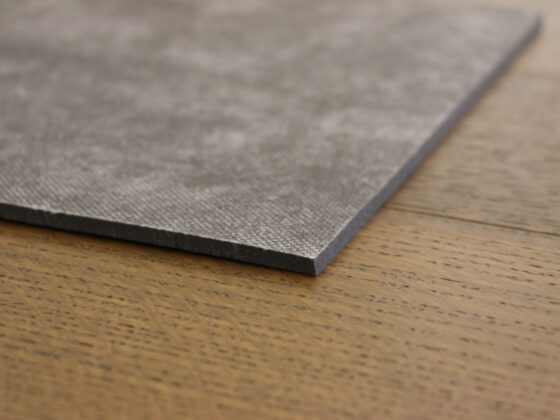
- Most rugs require an applied border or edge finish so that the rug does not unravel. This is especially true with a flat weave rug where the interlaced fibers would come undone if left loose. There are exceptions—a woven vinyl rug or a fusion-bonded rug from tretford® has a clean, sharp edge when cut, so no additional border required. But in general, an area rug will need a border.
What is serging?
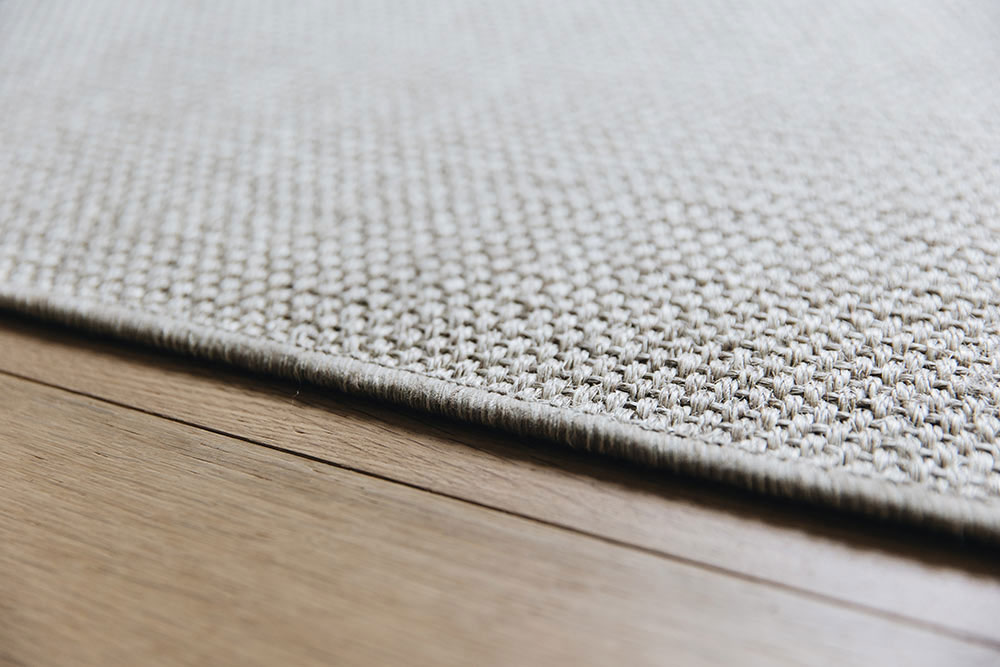
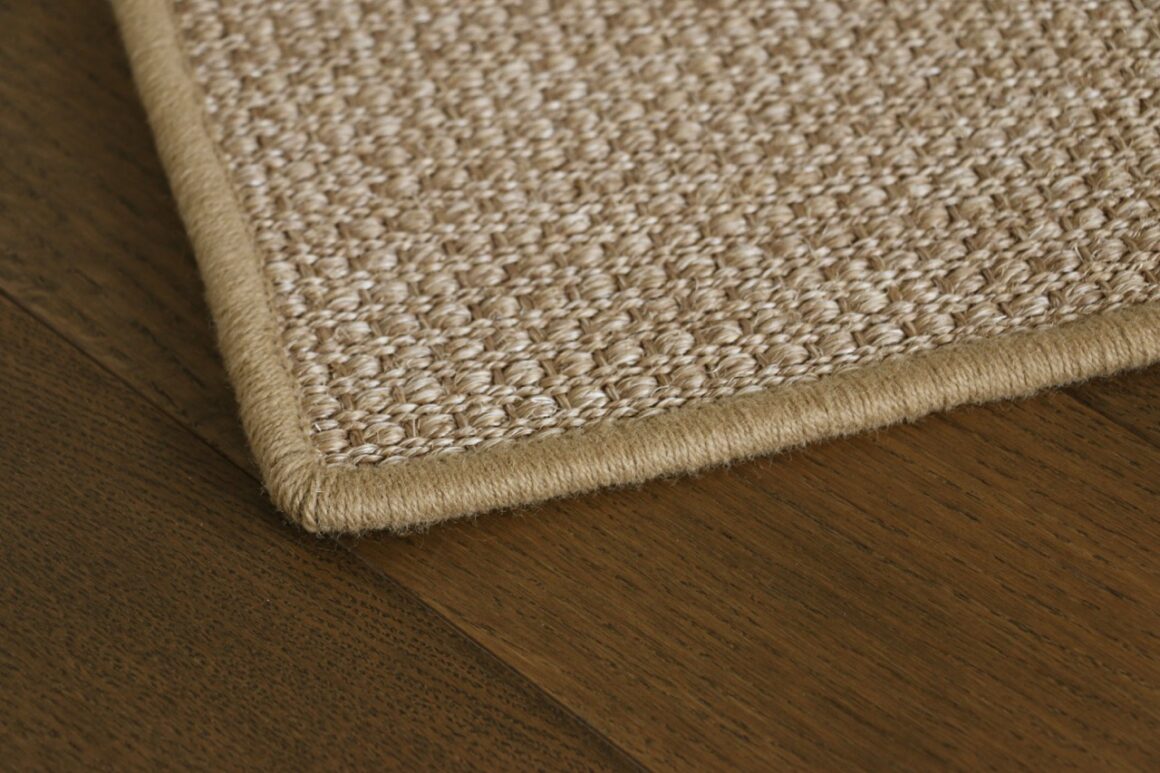
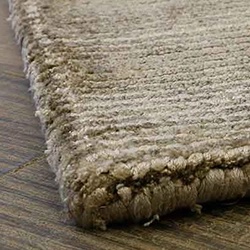
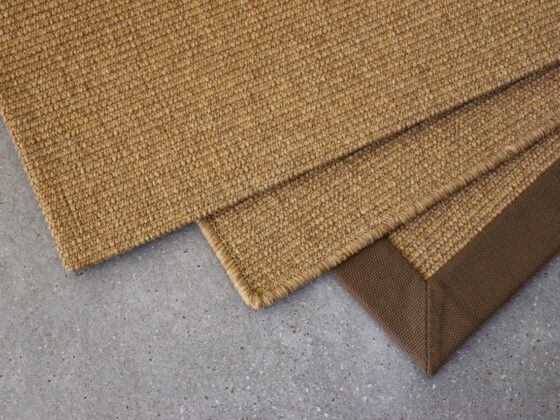
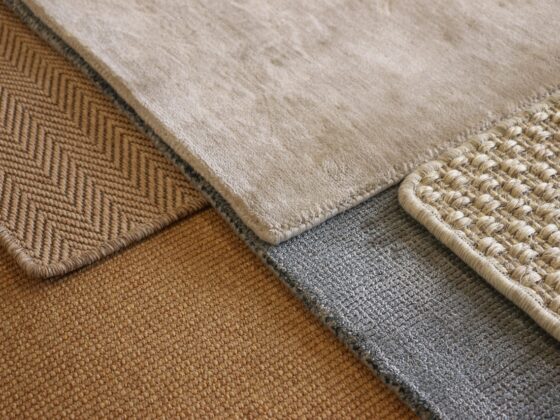
A serged edge is a continuous wrap of yarn sewn or threaded around the edge of your rug. The serging yarns are carefully chosen to match weave color. The finished width is about 3/8″ and looks very organic and minimalist. Below are some examples of a serged edge.
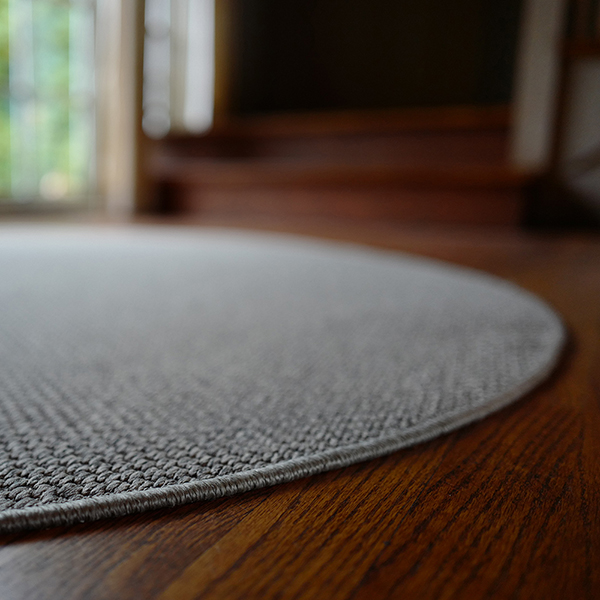
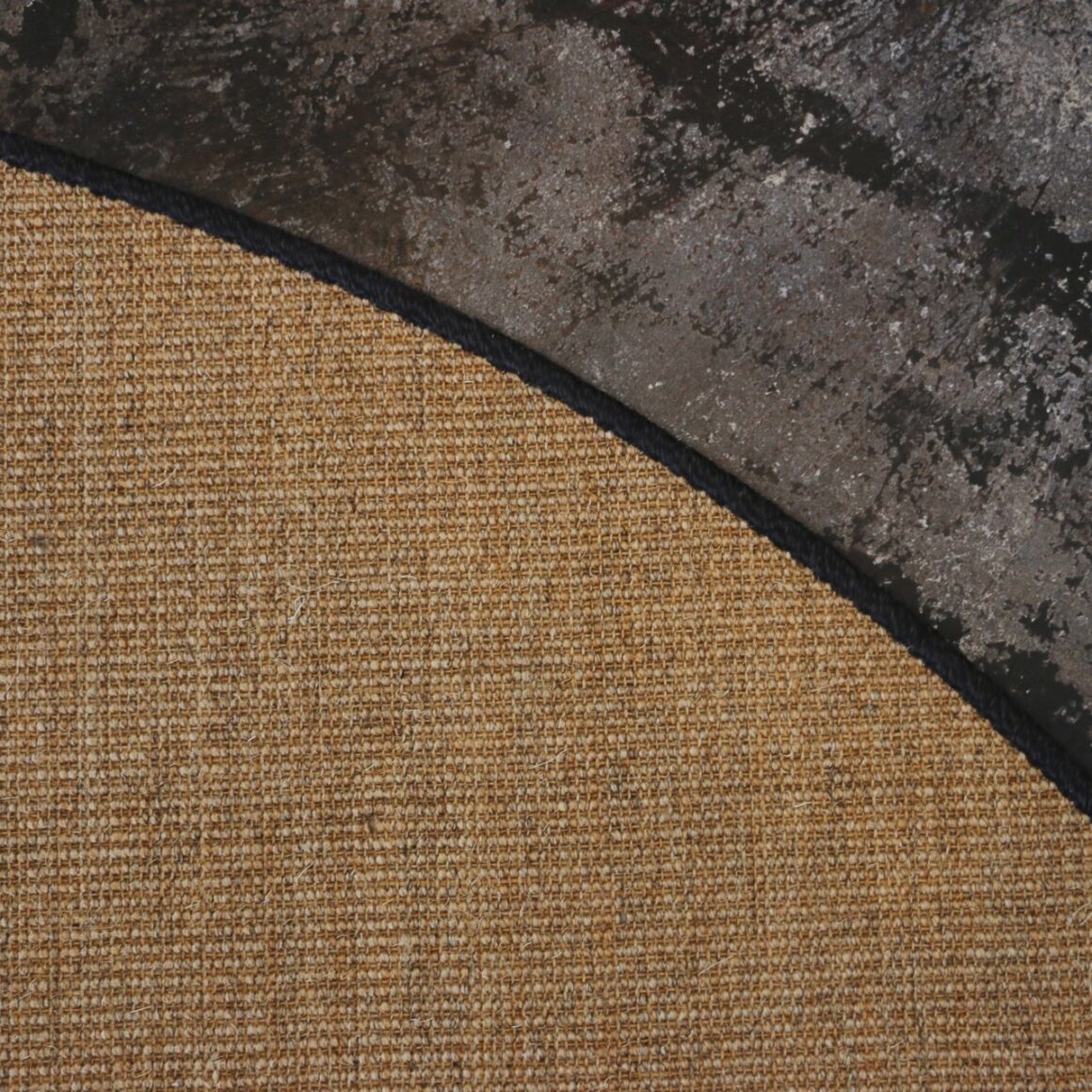
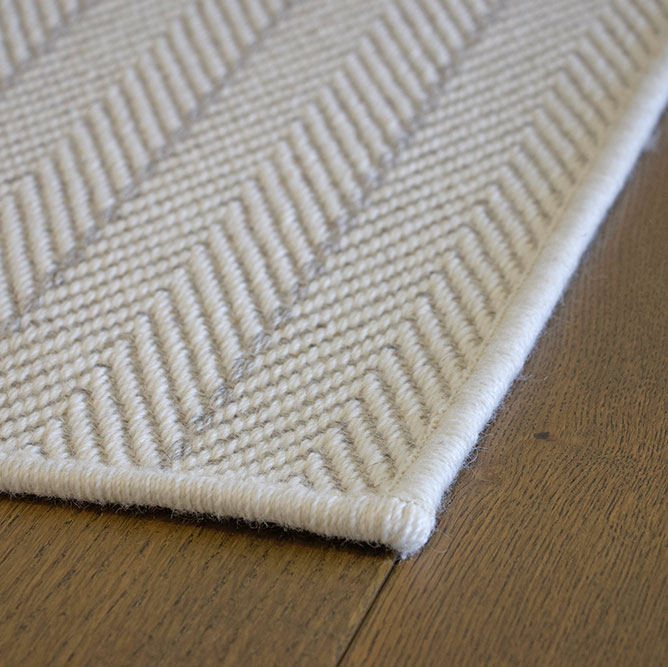
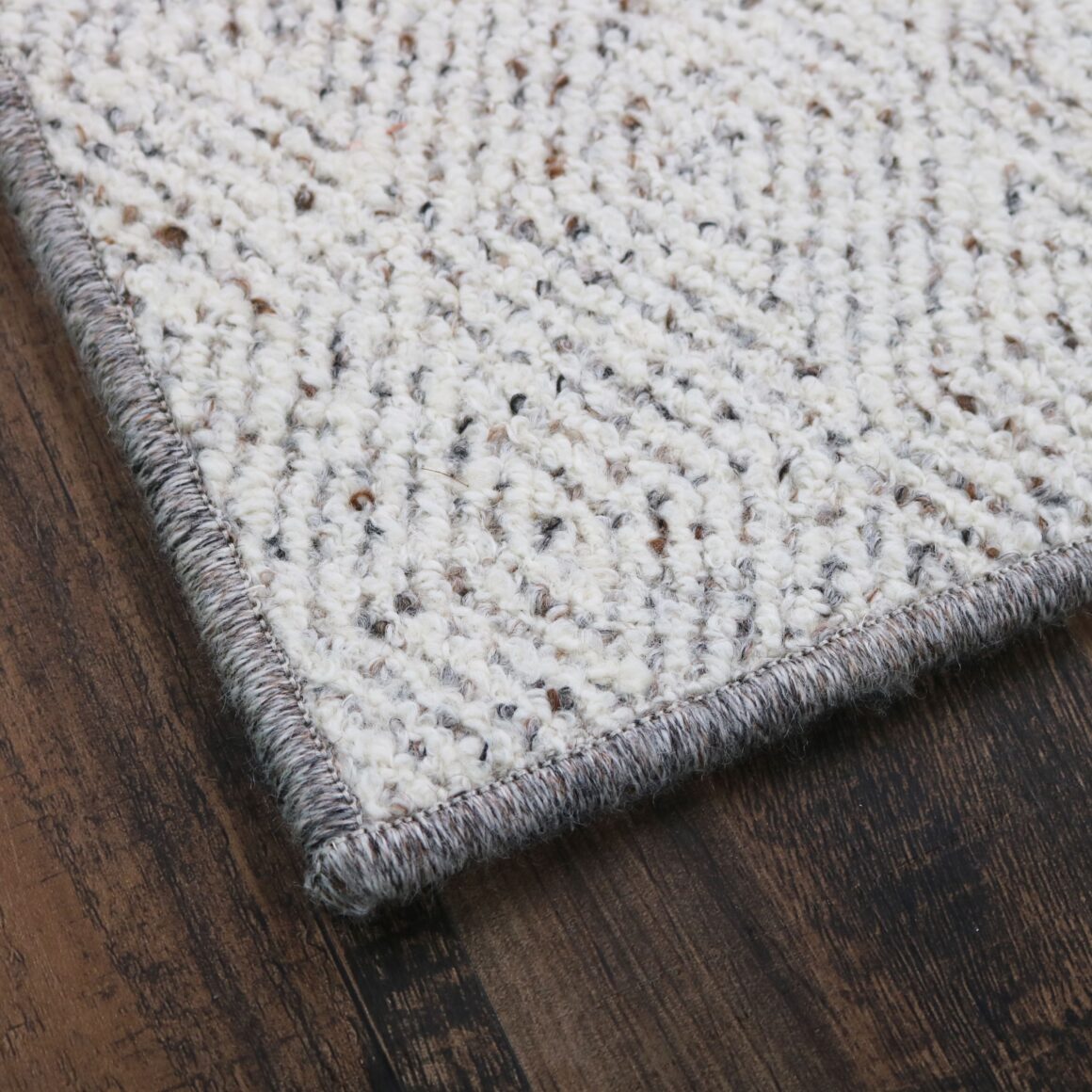
What is a hand-serged edge?
Hand serging is a beautiful finish for a rug. An artisan finishes the perimeter with an overcast stitch in a matching yarn, giving the rug a cohesive and sophisticated look. Luxury wools, handloomed weaves and rugs from Jacaranda offer hand serging. This border requires extra time, but the beauty is worth the wait.
What is a binding or border?
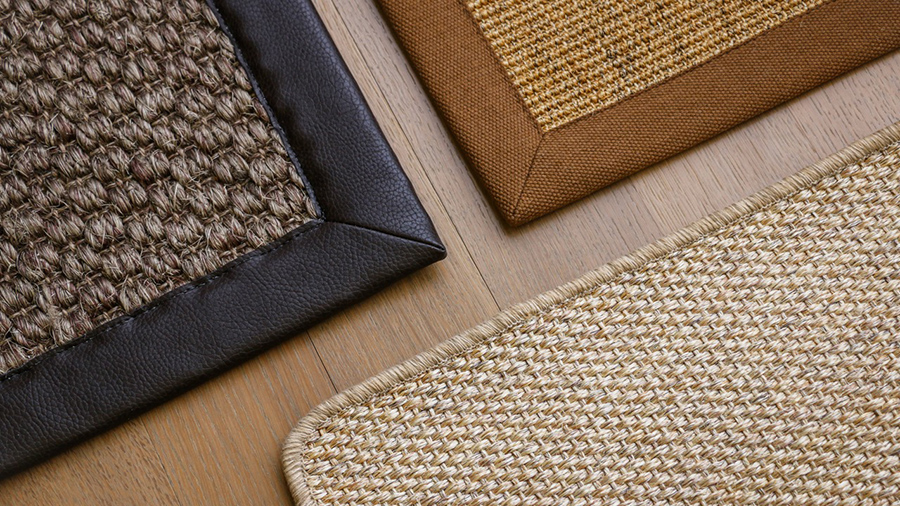
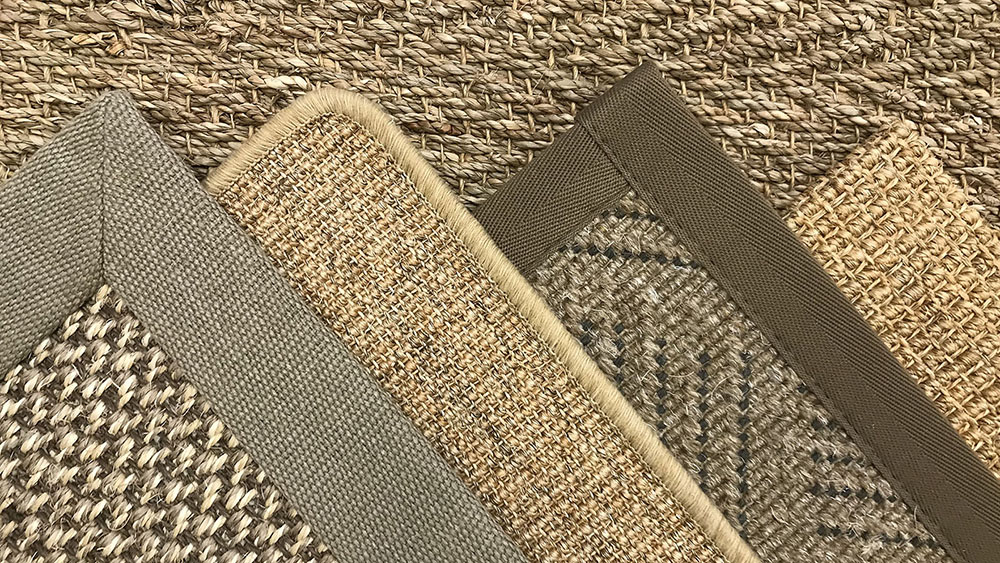
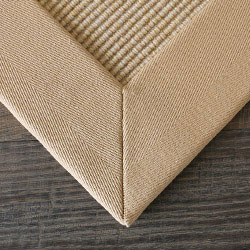
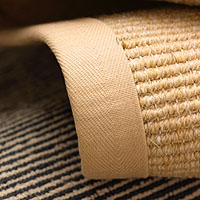
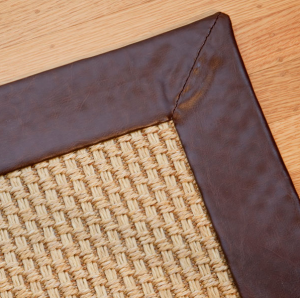
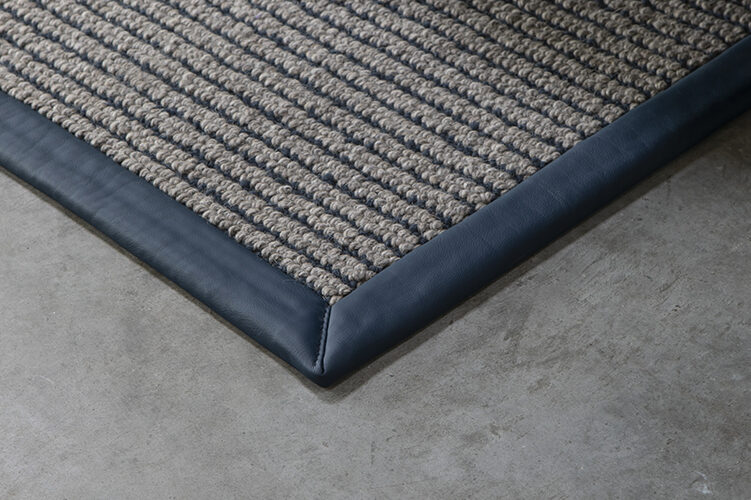
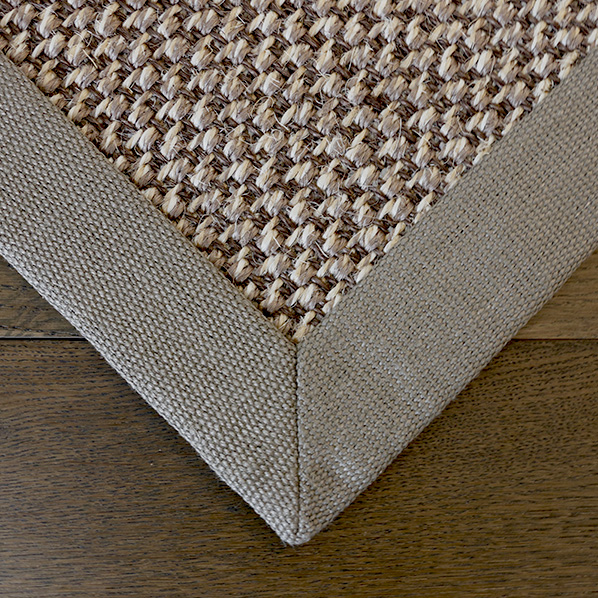
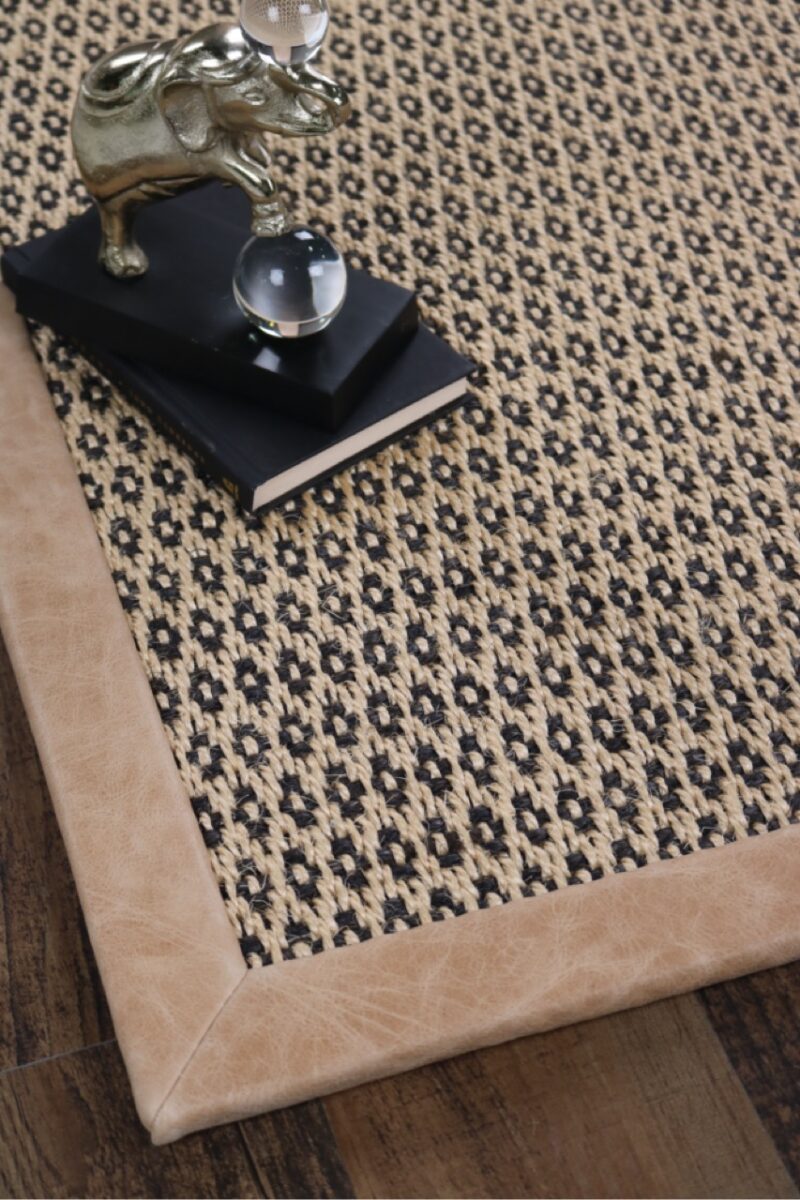
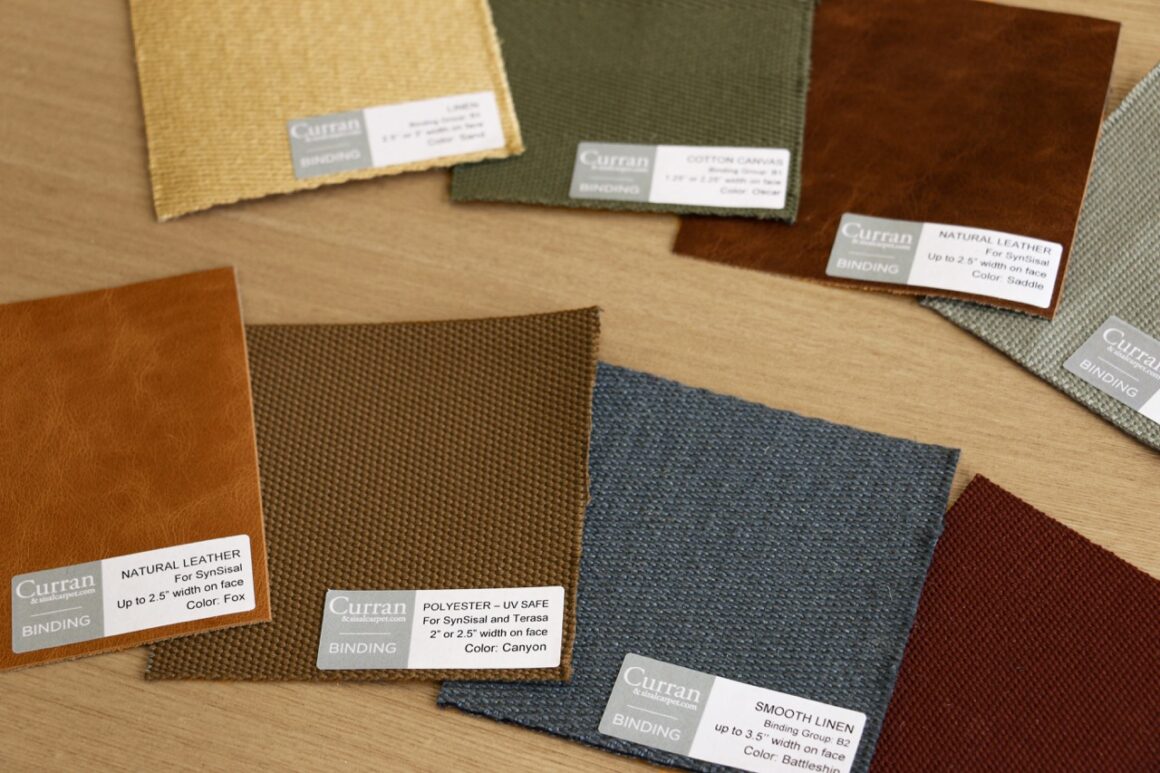
Although serging is technically a type of binding, “binding” typically refers to a cloth border application on the rug’s edges. A strip of material (like cotton, linen, leather, or polyester) is sewn around the rug’s perimeter to create a framed border. Here are some examples of cloth borders on rugs, from cotton and linen to leather and faux leather.
Which rug border should I choose?
Cloth borders are available in an array of colors and textures. Whenever possible, order samples of the border material to see which combinations of color and texture work with your chosen weave.
You can order samples of our cloth borders to find the perfect match. From your selected weave page, click Order Samples, then Border Samples.
How wide should the rug border be?
The amount of fabric that shows on the face of the rug is referred to as the reveal width. The reveal width ranges anywhere from 1/2″ to 3 ½” and does not add to the width of the rug.
What’s the most common reveal width?
Around 2-inches. For a more understated look, go narrow, like a 1/2″ to 1″. For a statement border or luxury look, opt for a wider reveal.
Additionally, consider scale when deciding the reveal width. A 3 1/2″ cloth border on a 5’x7′ rug will look off-balance. Additionally, a 3 1/2″ border on a medium sized rug in a small room may not look in balance either. Select a wider border for larger rugs and larger rooms.
Which one should I choose: serging or binding?
Both finishes are beautiful, but the right choice depends on the rug’s fiber, style, and the room where it will live.
| Feature | Serging | Cloth Binding |
|---|---|---|
| Look | rounded edge, seamless, minimal | framed, tailored, classic |
| Best for | high traffic areas, busy households | low to medium traffic areas, luxury spaces |
| Durability | strong, less maintenance & cleaning | cotton & linen require maintenance & cleaning |
| Cleanability | does not show dirt as easily as cloth | select synthetic borders or darker colors |
What is a lapped or mitered corner?
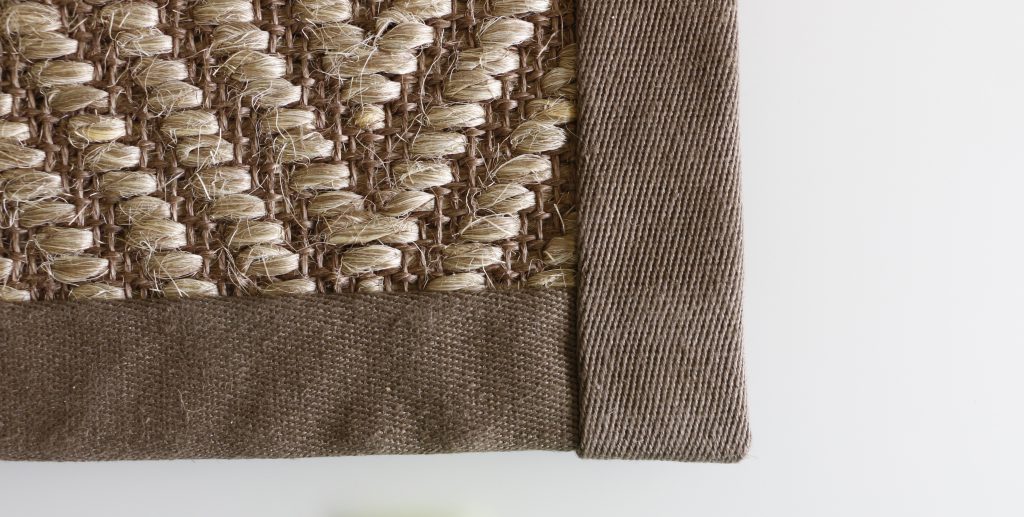
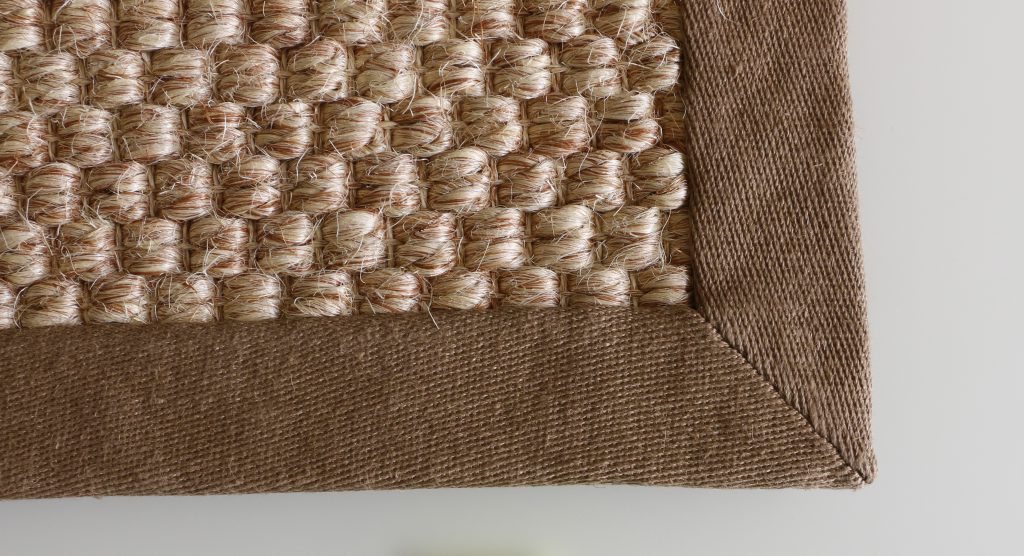
If you choose a cloth border for your custom rug, you may need to select a corner style—mitered or lapped—and a stitch type, such as top stitch or hidden stitch. Not every weave offers all of these options, but it helps to know the choices ahead of time.
Mitered Corner
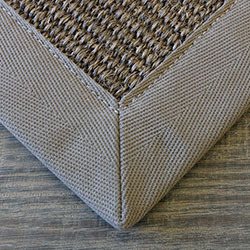
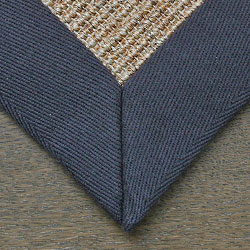
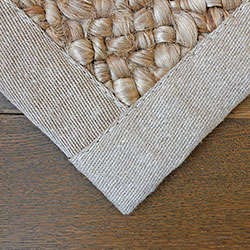
A mitered corner is stitched at a 45* angle. It is an elegant, classic finishing option. Stitching is either visible or hidden, as shown in the images below.
Lapped Corner
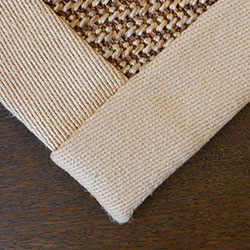
With a lapped corner, the cloth border overlaps at a 90* angle. Like the mitered corner, the stitching is either visible or hidden.
Which border option is best for an outdoor rug?
We recommend a polyester border or a serged edge for outdoor rugs or busy households.
Which border option is best for a stair runner?
A serged edge is a durable, tidy option for a stair runner, no matter the width of your staircase. If you like the look of a cloth border, consider scale: a narrow staircase might look even narrower with a wide cloth border. To visually expand the width of your staircase, consider a simple serged edge or install the carpet wall-to-wall.
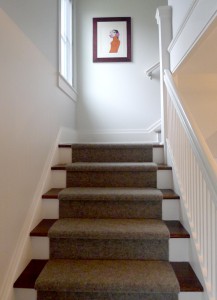
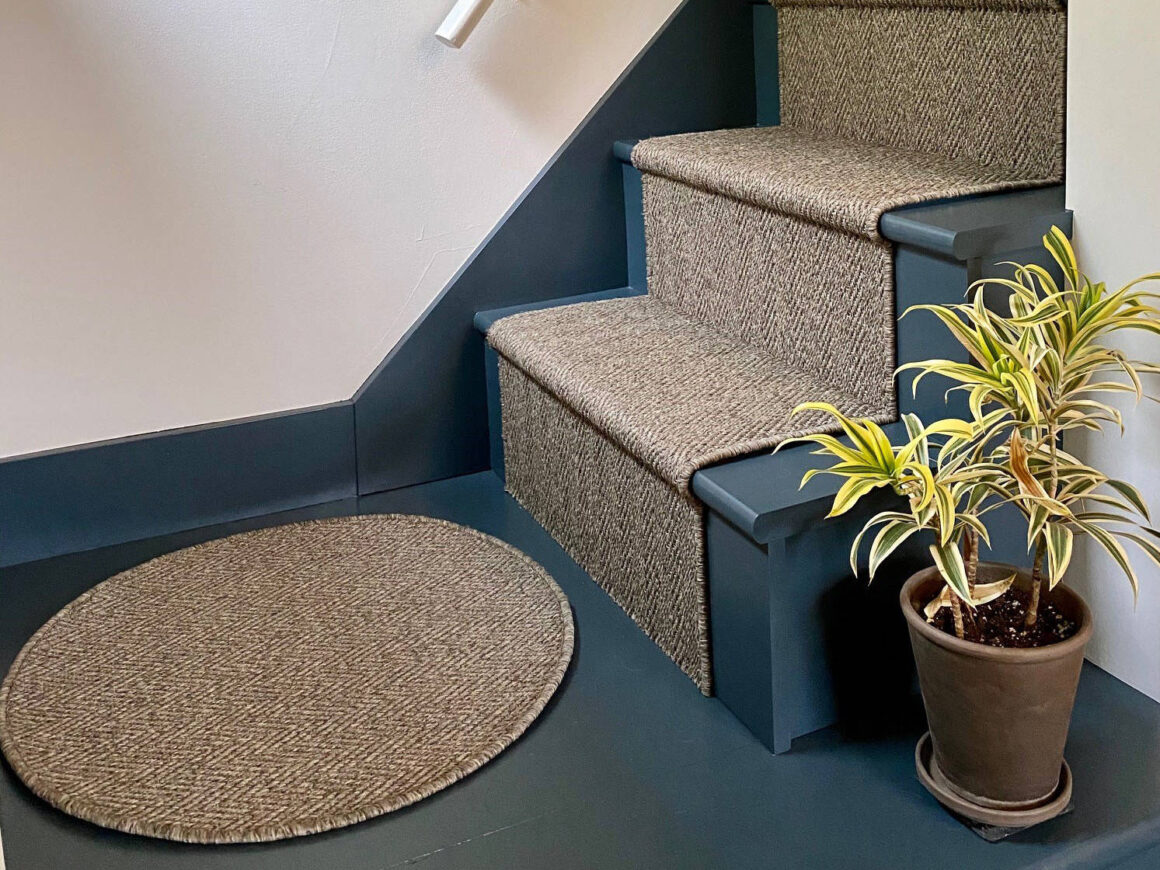
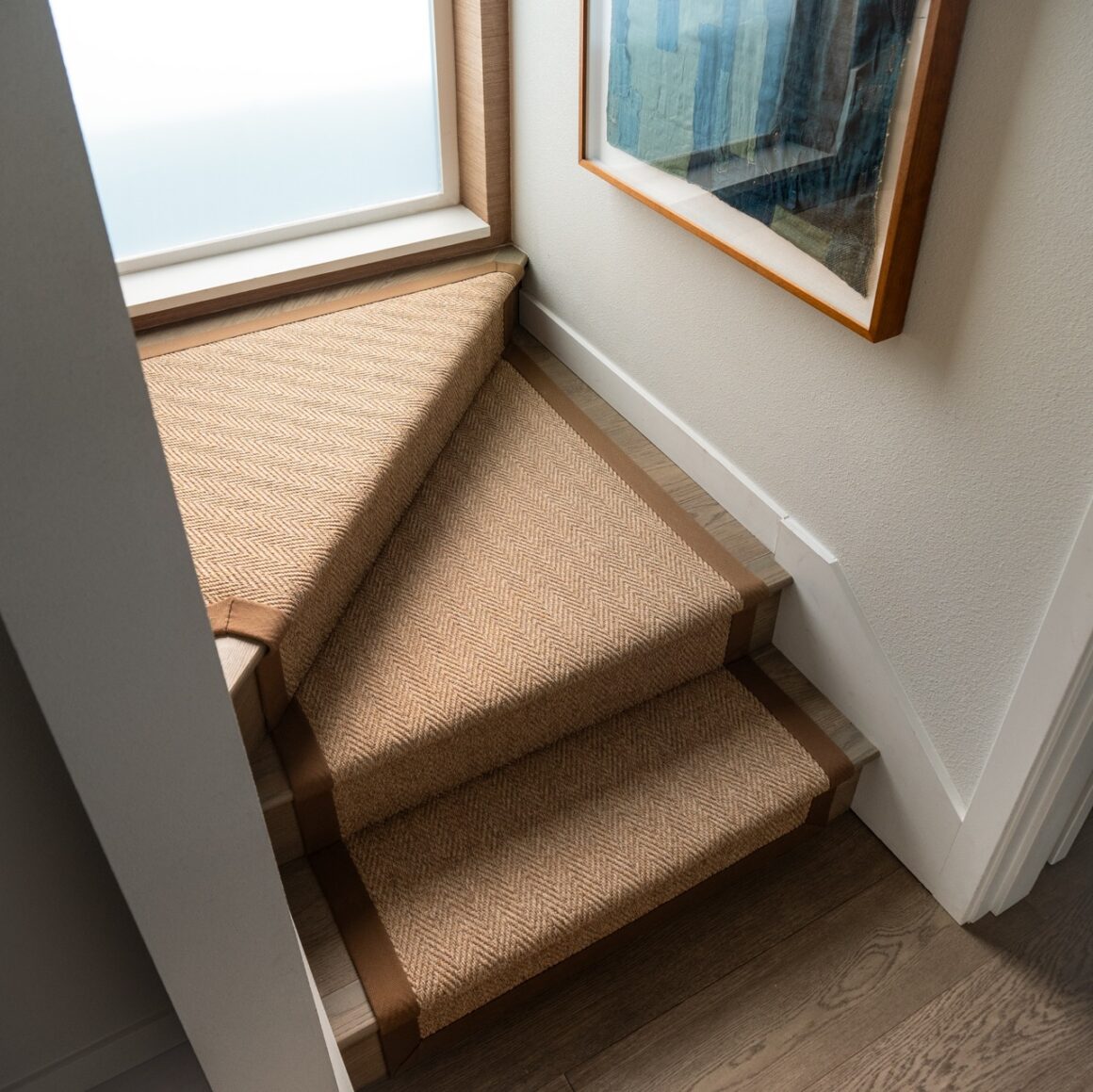
If you ordered broadloom and the material will be cut on site, you should speak with your installer about your finishing options. Your installer will recommend a local company to finish the stair runner with your choice of border.
What is the Infinity Edge border option?
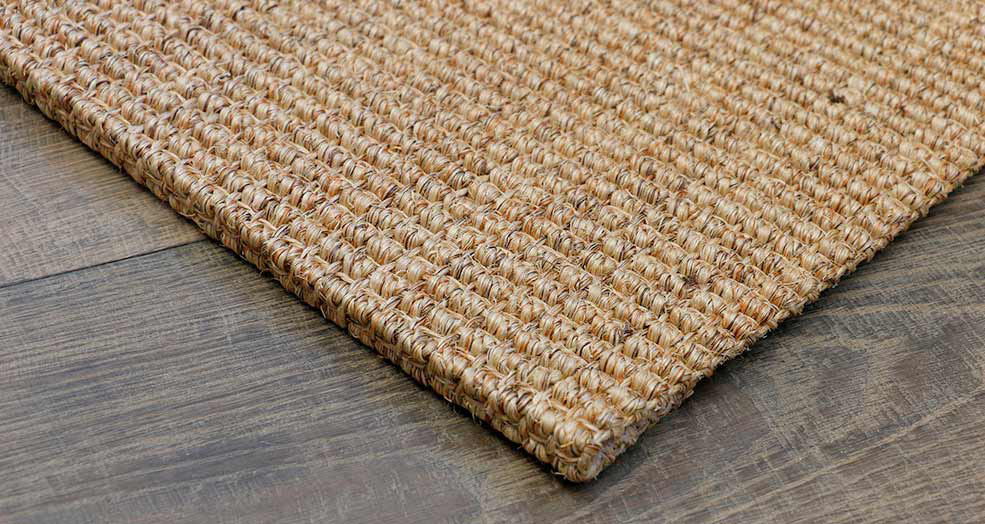
Common on many natural fiber rugs and faux sisal weaves from SynSisal® and Terasa, the Infinity Edge is a minimalist finish that has no visible border at all and creates a clean, elegant edge. Watch the Infinity Edge video or learn more about this unique border in the post The Infinity Edge: A Clean, Modern Finish for Custom Rugs.
For more details on border options and to view the different colorways available, visit our Rug Border Guides page.
1 comment
Awesome info. I’m trying to learn more about rug production and this article is very helpful.
Thank you and you’re very welcome. Glad you liked the blog post. 🙂