

Published June 2016 | Updated March 2024
Fire code requirements are a critical consideration when specifying wallcoverings for commercial and public spaces. Below, we outline fire code considerations for wallcoverings and highlight natural and textile-based options—including sisal wallcovering and tretford® Acousticord—that work well in commercial interiors.

Wallcovering Options for Commercial Spaces
Designers and specifiers need materials that meet safety standards without sacrificing aesthetics, acoustics, or durability. Textile wallcoverings must be thoroughly tested, meet local fire code requirements, and be installed properly. Popular options include woven vinyls, sisal fabric, and acoustic wallcoverings designed for commercial use.
Sisal Wallcovering
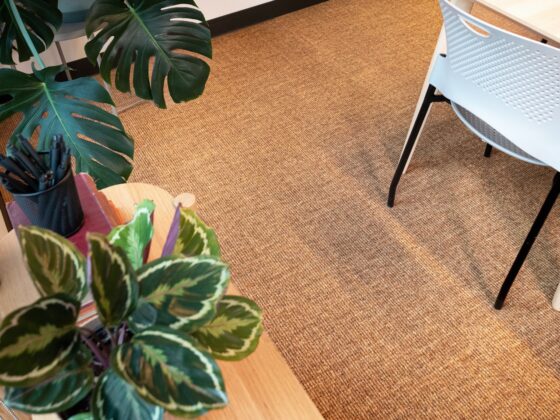
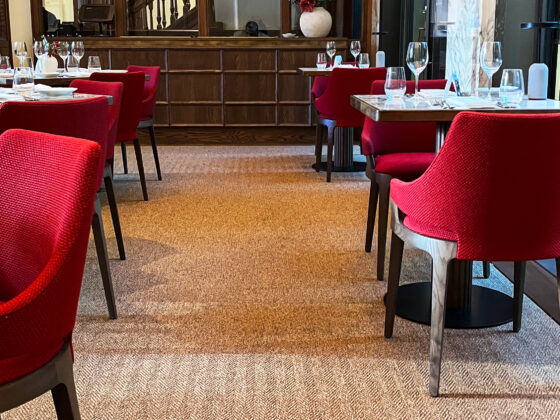
Sisal wallcovering offers a natural, textured look that adds warmth and dimension to commercial spaces. Livos Wallcovering is a woven sisal fabric that meets fire code requirements when installed according to manufacturer specifications. Sisal wallcovering is often used in hospitality, boutique retail, and corporate interiors seeking an organic aesthetic.
tretford® Acousticord Wallcovering
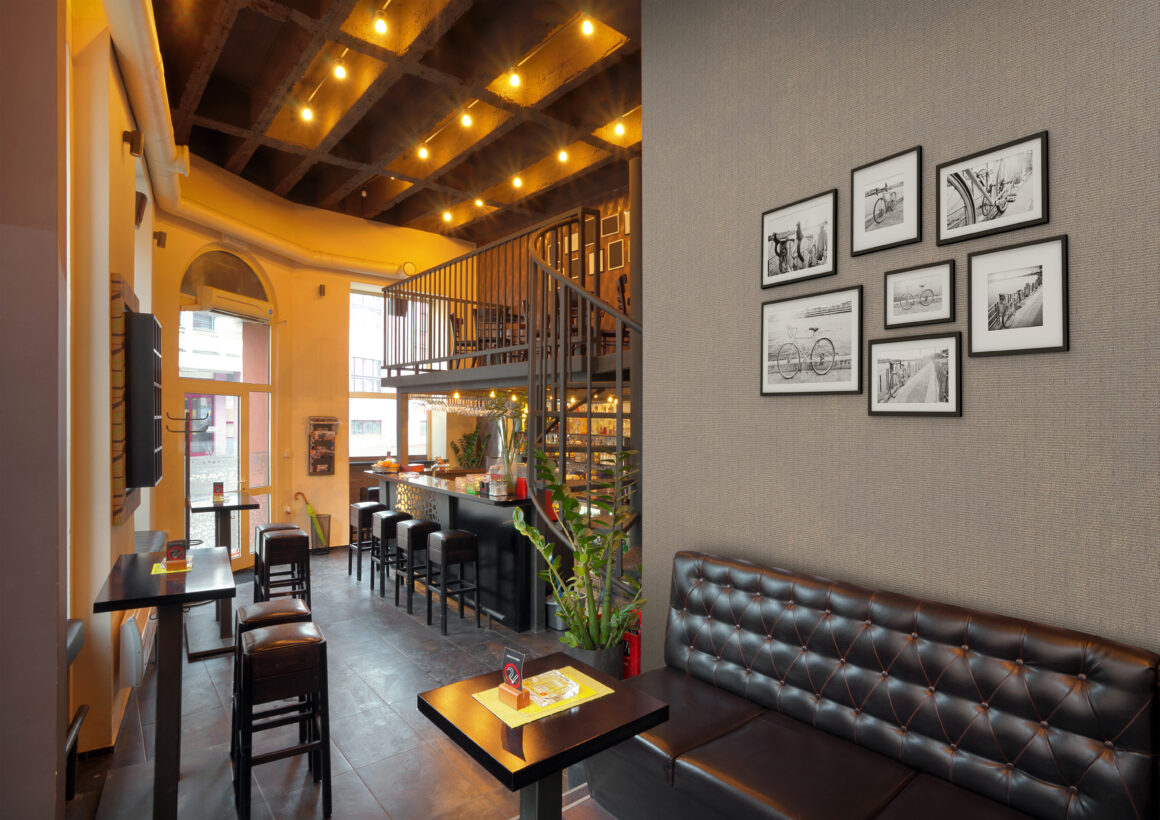
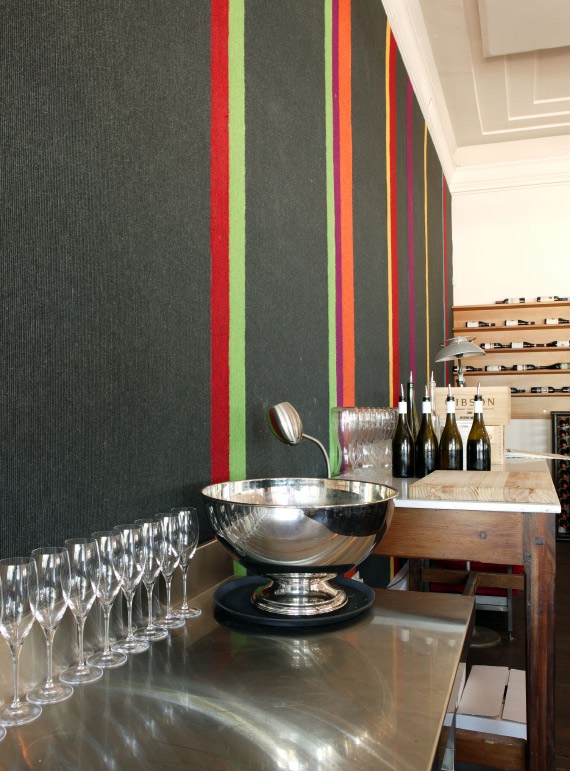
tretford® Acousticord is a ribbed textile wallcovering made from natural goat hair and designed specifically for commercial environments. In addition to meeting fire safety standards, Acousticord improves acoustics by absorbing sound in offices, hotels, libraries, universities, and other high-traffic spaces. Its wide color range and clean, linear texture make it a favorite among designers specifying modern wallcoverings.
Can I use a contract-grade rug or carpet as wallcovering?
No. Even if a rug or carpet carries a Class 1 (Class A) fire rating for floor use, that rating does not automatically apply to wall installations. Fire performance is tested based on how and where a material is installed. A product approved for use on the floor may behave very differently when installed vertically.
To be used as wallcovering, a material must be specifically tested and approved for wall applications, including the correct backing (if it has one), adhesive, and installation method. Without that testing, a floor product should not be installed on walls.
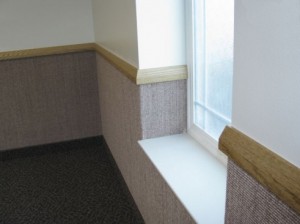
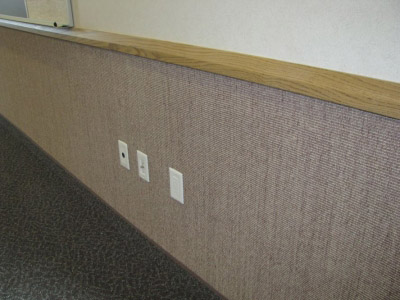
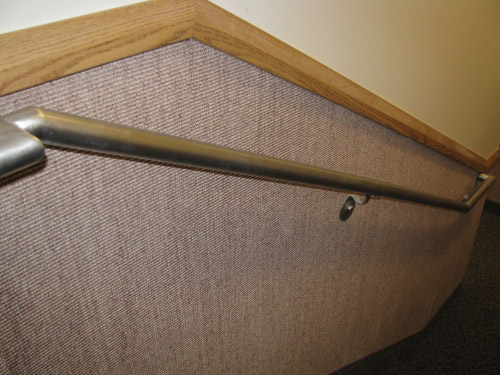
Because fire code requirements can vary by building type and jurisdiction, it’s important to review project specifications and consult local code officials or fire marshals when selecting wallcoverings. Manufacturers of commercial wallcoverings can provide fire test documentation to support the approval process.
Fire Code Requirements for Commercial Wallcoverings
In commercial and public spaces, wallcoverings must comply with fire safety standards established by building codes and testing agencies. While requirements vary by jurisdiction, most projects reference the following:
Key Fire Performance Standards
- ASTM E84 (Steiner Tunnel Test)
Measures flame spread and smoke developed.
This is the most common test for wallcoverings in commercial interiors. - Class A Rating (often required)
- Flame Spread Index: 0–25
- Smoke Developed Index: 0–450
Frequently specified for corridors, lobbies, hospitality, healthcare, and assembly spaces.
- NFPA 286 (Room Corner Test – when required)
Used for certain textile or upholstered wall systems to evaluate fire growth in a full-scale scenario.
The Importance of Adhesives in Fire Performance
Fire performance isn’t determined by the wallcovering material alone. Adhesives play a critical role in how a wallcovering performs in a fire scenario. In fact, investigations following major fires—including the MGM Grand fire in Las Vegas—identified combustible adhesives as a contributing factor to fire spread when used behind wall finishes.
For commercial projects, wallcoverings must be installed using approved, fire-rated adhesives that match the tested assembly. Even a wallcovering with a Class A fire rating can fail to meet code requirements if paired with the wrong adhesive.
When specifying wallcoverings for public spaces, it’s essential to:
- use adhesives recommended by the manufacturer
- confirm compatibility with the substrate
- ensure the adhesive is included in the fire test documentation
Working with experienced installers and reviewing manufacturer guidelines helps ensure that the entire wall system—not just the surface material—meets fire safety standards.
Commercial Specifiers Checklist
If you’re specifying wallcoverings for a commercial project, documentation is essential. Here’s what to look for:
- Fire rating and test documentation from the manufacturer
- Manufacturer installation guidelines
- Acoustic performance (when required)
- Durability in high-traffic areas
- Maintenance and cleanability information
- Compatibility with substrates and adhesives *fire ratings apply to the tested assembly, including backing materials if present and adhesives
If you need help selecting materials that meet your project’s requirements, our team is happy to assist. We can provide product details, testing documentation, and guidance on installation for wallcovering and acoustic solutions.